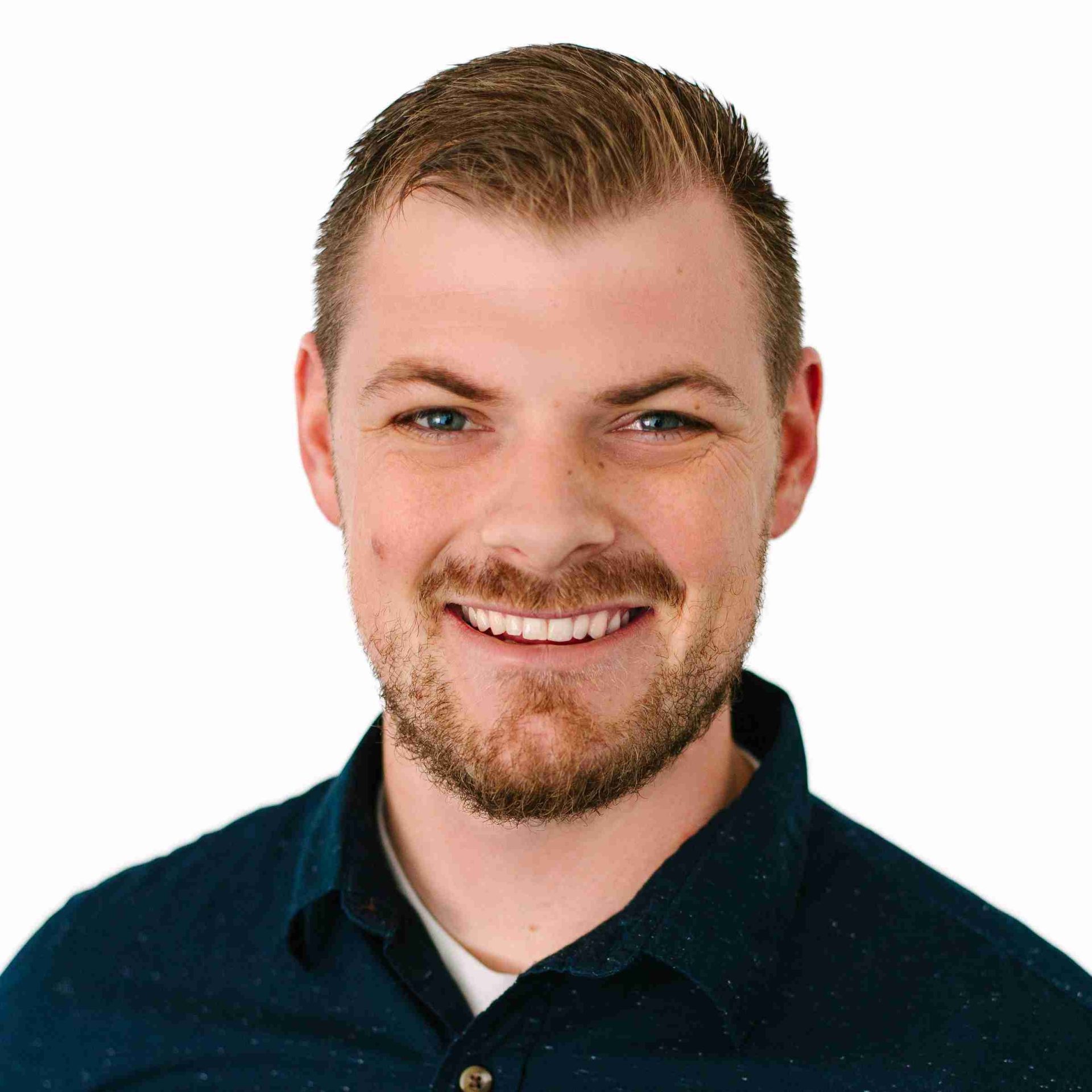
Drew Timmermans
ND, RMSK


In this episode we discuss the management of chronic pain through holistic approaches, including nutrition, supplements, and alternative treatments like PRP and stem cell therapy. Speakers share their personal experiences and insights, emphasizing the importance of addressing the root cause of pain and exploring non-insurance options. They also discussed the potential of nutrition in pain management, particularly protein consumption. The speakers highlight the limitations of conventional painkillers and the need for more holistic approaches in reducing inflammation and promoting tissue healing.
Dr. Drew Timmermans 0:00
So I worked as a personal trainer for a year as I was, like, beefing up my resume and CV and all that. And really this was, you know, devastating at the time, but in hindsight, it was the biggest blessing that I ever got.
Natalie 0:11
I love that you specified when you said naturopathic doctor, and you’re like, it’s still a doctor.
Dr. Drew Timmermans 0:14
During that time, though, I was in a car accident, I herniated two discs, and I had my own chronic pain now for a period of about two years, I couldn’t really find a really significant relief for my back pain. It ended my track and field career, I mean, it changed the trajectory of my life-a sprain in my ilealumbar ligament and a tear in the fascia of my trap muscle.
Natalie 0:37
Woah.
Dr. Drew Timmermans 0:38
The next day, he did PRP on me at the conference, and three months later, I was pain free. What are people in chronic pain trying to do?
Natalie 0:46
Build and repair tissue?
Derek 0:47
Yep. There you go.
Natalie 0:49
We’re such good students.
Dr. Drew Timmermans 0:52
The goal here is, let’s open up the highway such that the peptide can actually get delivered to the area that we want it to.
Natalie 1:00
Welcome to the show, Drew. We’re so excited to have you today.
Dr. Drew Timmermans 1:03
Thanks for having me. I’m excited to be here.
Natalie 1:05
Oh my gosh, we’ve got a lot of energy in the studio today, so it’s really interesting energy, but I’m loving it, and we’re excited to have you here, and we would love to know a little bit more about you before we dive into the meat and potatoes of all of these topics that we want to cover, and we’re going to try to get through this all, because there’s a lot that we’re really excited to chat with you about. So maybe tell us a little bit about your background, your education, what it is you’re doing now and why you’re so passionate about it.
Dr. Drew Timmermans 1:29
Sounds good. So my name is Drew Timmermans. I’m a naturopathic doctor, which, for those who aren’t familiar, a naturopathic doctor still goes through four years of med school. We go to a different med school, we go to naturopathic med school, and from there, some people will specialize into different areas of medicine, where the direction that I chose to go was chronic pain management, regenerative medicine, regenerative injection therapy, things like that. But I originally grew up in Canada, so I’m from Southwestern Ontario. You might hear the accent at some point, come out a little bit.
Natalie 2:03
Can’t wait. Come out.
Dr. Drew Timmermans 2:05
Yep. [laughing]
Derek 2:05
Come oot.
Dr. Drew Timmermans 2:07
But I moved out to Arizona to go to med school in 2013, met my wife out here, opened a practice, did residency out here, and just really never left. And so what I specialize in, and what I love doing is helping people who are suffering with acute or chronic pain, especially the people who have kind of been told there’s nothing really that we can do. It’s either just wait for surgery or here are some opiates or hear are some some anti inflammatory medications, go to physical therapy, and they’re just kind of left feeling like they’re not really getting anywhere, and they’re still just suffering, and they’re told to just deal with it. And so that’s the, that’s kind of the area that I love to focus on and help people with.
Natalie 2:50
I love that you specified when you said naturopathic doctor, and you’re like, it’s still a doctor that goes to four years of school. Because I think when people hear something like naturopathic or holistic, it’s kind of like set aside in this other category that’s like a little bit Woo, woo, and not quite as trusted. You know, we’ve become so focused in our westernized culture on the science and like-and to be fair, and we’ve talked about this before in other episodes… Do what?
Derek 3:12
Science with a capital S.
Natalie 3:13
Right. Science with a capital S, like this religion, right? And it’s done a lot of good for us, right? There’s, there’s, there’s so much that we’ve developed as a country through the science in medicine that has been incredibly helpful. But in, there’s a lot of ways, there’s a lot of ancient wisdom that’s been lost in the mix of that. And so as a result, I think again, when you hear some people, when they hear naturopathic, holistic, those kinds of things, it’s kind of like, oh, but they’re not like a real doctor, right? So I love that you specifically were like, hey, still, still, like, went to the school, still have all this knowledge and learning. And me, personally, I’m always a big fan of anything that’s sort of like alternative a little bit, because I think it’s really important that we have this holistic approach and the way that we approach our healthcare. And it’s so important-One of the reasons that we do this podcast at all is because, in this age, people really need to advocate for themselves, right? There’s so much information out there, which can be a great thing, but it can also be a little bit damaging as well, right?
Dr. Drew Timmermans 3:13
Mm hmm. Yes. Yes it can.
Natalie 3:18
And so thank you for taking the time to come on and chat with us. Derek, where do you want to get started on this?
Man there’s so many different directions we can go. I, like so chronic pain was the main you said, is your main focus? What did you say? The second one was, again?
Dr. Drew Timmermans 4:28
Acute pain. Anybody in pain, really those are the only patients that I work with. If somebody does not have some form of chronic pain as their primary issue, and that chronic pain has to be more of an orthopedic thing. So if this is like rheumatoid arthritis, or, you know, something autoimmune in that sense, then that’s not going to be my wheelhouse, but if it’s, you know, chronic back pain, chronic knee pain, rotator cuff tear, things like that, that’s where I’m really going to specialize.
Natalie 4:56
Can I ask? I want to ask, though, just real quickly, why chronic pain like is? What is it that like made you lead into this specific area of focus? And my guess is, with your degree, you had a lot of options available to you on where you wanted to take your learning and like, shape your expertise. So why pain?
Dr. Drew Timmermans 5:14
Yeah, um, it’s a good question. So my original plan so up in Canada, naturopathic doctors. So in Ontario, they’re still licensed, so still physicians, all that stuff, but it’s not as big of a profession there. And in Canada, we don’t have D.O.’s. So out here in the States, you have an osteopathic doctor, right? You can go MD or DO route, and you can basically end up at the same place. You could be a cardiologist, a surgeon, whatever you want to do. In Canada, we don’t have that. In Canada it’s just MD, and then you’ve got MD, and you’ve got, you know, now you’re starting to get your nurse practitioners and that type of stuff interesting. And so initially, when I wanted, I’ve wanted to do medicine since high school, and but then I didn’t know that there was anything other than MD, and so I, I really had an interest in the cardiovascular system. And so in undergrad, I did some shadowing with a cardiovascular surgeon, saw an open heart surgery, which was the wildest thing.
Natalie 6:16
Wild. I cannot even imagine.
Dr. Drew Timmermans 6:18
Yeah. And I it was super cool, because I got to stand at where the anesthesiologist stands, which is at the head of the patient on a stool, basically almost looking over down into an open chest cavity. It was so cool.
Natalie 6:31
That’s crazy!
Dr. Drew Timmermans 6:32
Um, but I saw that surgery, and I was like, You know what? Like, that is a a medical marvel. But it didn’t really like getting me going. And so I still knew I won’t do medicine. And I was an athlete. I ran track and field predominantly in undergrad. And so it’s like, okay, well, I’ll just do sports medicine. Like, I enjoy, you know, I enjoy physio type stuff. I enjoy athletics, that stuff, so I’ll just do sports medicine. So I applied to allopathic med school, so it’s MD School up in Canada, okay, didn’t get accepted. I had interviews. Didn’t get accepted, and so I worked as a personal trainer for a year as I was like, beefing up my resume and CV and all that, that stuff. And really, this was, you know, devastating at the time, but in hindsight, it was the biggest like blessing that I ever got, because it stopped me from going down that MD path. So I’d be in, I’d be an MD today, and I wouldn’t be a naturopath. And so during that time, though, I was in a car accident, I herniated two discs, and I had my own chronic pain now.
Natalie 6:32
Mmmm. I wondered.
Dr. Drew Timmermans 6:35
And so, yeah, and so for a period of about two years, I couldn’t really find really significant relief for my back pain. It ended my track and field career. I mean, it changed the trajectory of my life for sure. And so when I moved out here to Arizona to go to naturopathic med school, I still didn’t, like really know what I was going to do. I was exploring, you know, some integrative oncology stuff, because there’s a lot of really interesting stuff there. And then I went to a sports medicine conference out in Florida. At this time, I still had back pain. Go to Florida. At this conference, I got diagnosed by the president of that association. He did a physical exam and an ultrasound evaluation on me. Diagnosed me with something that I had never been diagnosed with, which was a sprain in my ilial lumbar ligament, which is a small, little ligament in the low back and a tear in the fascia of my trap muscle. The next day, he did PRP on me at the conference, and three months later, I was pain free.
Natalie 8:48
Stop.
Dr. Drew Timmermans 8:50
No joke.
Natalie 8:51
And you’d been dealing with this for years?
Dr. Drew Timmermans 8:53
Dealing with at that time point, it was two years, yeah,. And so at that point I was literally like, this is what I’m going to do for the rest of my life. It just it clicked. It resonated. I loved what PRP was and everything like that, and I have not turned back since.
Natalie 9:11
I’m so glad I asked you that question, because I think it, it, I love whenever somebody gets in a specialized field, when it’s kind of personal, right? I think that the best professionals come out of experiences like that that are personal. It gives you an incredible amount of compassion and empathy for your patients, a huge level of understanding and just passion for your work in general. And I mean, even think about even just like personal training, I have a friend Drew lives in Hawaii. Now, I don’t know if you’ve ever heard of the Fit to Fat to Fit Guy, and he literally had been a trainer his whole life, but he put on all this weight because he wanted to understand what it was like for his clients, you know? Who were 70 pounds overweight, and what it felt like, and the cravings to be able to have empathy. And I’m like that just makes so much sense to me. And so that popped in my mind when you were talking about it. And I think it’s so cool that you have that experience to really drive you in the field that you’ve chosen, right? And there’s so many people that deal with chronic pain and it’s just debilitating. And I can only imagine, I myself, have never really had chronic pain like that, so I can’t imagine, and especially for you to, like, be in this position where you’re not getting relief, right? And then to go and have this one single experience, not even, like, meet this doctor, appointment after appointment, scan, X ray, MRI, whatever it may be, let’s try it, like, just literally, boom, right? And you said it was as simple as, like, ultrasound? That kind of blows my mind a little bit, because I would assume, like, X rays or all these other things need to happen to get, but is just not the case when it comes to diagnosing what’s causing pain.
Dr. Drew Timmermans 10:52
Oh, good question. So this ties into something that I’m extremely passionate about, which is trying to separate out imaging from chronic pain. And imaging is extremely, extremely crucial in a lot of cases, and it was very helpful in my case. But what you have to do is you have to link the imaging with what the patient is saying. And so, for example, in my case, I had-if you did an MRI on me at that time, I had two herniated discs. At that time, those discs were not causing me any pain despite having the discs, but because no physician ever did a proper physical exam on me to be able to say, oh, wait a minute, the activities that should aggravate you when you have discogenic pain are not aggravating you, therefore those discs are asymptomatic. I was left just being told, well you have disc herniations. Go to PT for a disc issue. Well, I’m going to PT for disc issue, and it’s not helping me because the thing that’s causing me pain is not actually my disc. And so this doc listened to my story, he did a physical exam on me, then he did the ultrasound imaging, which his approach is really unique in that he’s looking for small tears in fascia and ligaments, and that’s the stuff that we do now as well, and you could have probably gotten some of that information, at least the ileal lumbar ligament from from a good quality MRI, but it’s just the fact that we took the imaging and then correlated it over to okay, but does that match up with the problem? Because there are lots of people out there who have no back pain, and they have herniated discs.
No kidding, I wouldn’t have thought that.
Derek 12:44
We actually had a guest on previously that talked about this Erson Religioso. I’m butchering his name.
Natalie 12:50
Oh yeah! Religioso.
Derek 12:50
Sorry dude. He actually talked about kind of a similar concept, where, where imaging can be somewhat of a red herring sometimes, where, like, like, people get imaged with these herniated discs. And when someone hears the term herniated disc, they’re like, oh, that’s serious. That’s really bad. And then they can do the opposite of, like you’re saying. There’s cases where they have a herniated disc and there’s no back pain. There’s other situations where people hear a herniated disc and then all of a sudden they make up, not make up, but like, all of a sudden they they’re looking for signs of pain, and it can exacerbate it and make things worse. And an analogy that he used, that I really, really liked, is he’s like, when you do these images and these scannings a good way to convey it to the patients is it’s like, it’s like internal wrinkles, right? If you see wrinkles on your face, it’s not like this terrible thing that’s going to end your life, but it is a sign that there is something underneath, under the hood that is causing that to be happening, right? And so, yeah, I don’t know if you’ve got any thoughts on that.
Dr. Drew Timmermans 13:54
Yeah. You know, I 100% agree with that. And I’ve had several patients over the years who have catastrophized after the fact, you know, once they learn something, but it I think a few things. One is, I’m always working on, how do I deliver this information? And two, how do I also convey that we have solutions. I think that’s one of the other pieces to this. Is that in the conventional medical community it’s, Okay, you’ve got a herniated disc, and just wait until it’s bad enough, and then we’ll do surgery. And it’s kind of this, like it leaves patients feeling like there’s nothing that they can do. There’s no empowerment. They can’t, you know, change things on their own
Natalie 14:38
Just waiting for the inevitable.
Dr. Drew Timmermans 14:40
Yeah, and so I think that mindset that is imparted from the standard medical community has not serviced patients well, such that there’s now fear around a herniated disc. I currently have no back pain because of the things that I’ve done for my back over the years, but if we did an MRI on my back, I would still have two herniated discs. They’re just not painful. Could they become painful in the future? Yes, will they? They probably will, and I will probably need continued care over the rest of my life for my back. And that’s just the cards that I was dealt from that accident. But it’s that acceptance that, hey, it’s going to happen again. I know what to do, because I’ve gotten to this place. And so there’s a lot of psychology around chronic pain as well. It’s hard to layer that in with patients. Some accept it easier than others.
Derek 15:34
Can we dive into that a little bit? So, because I just had a concept of this kind of pop into my mind, and we’re so lucky that we’ve talked with so many experts. I feel like that’s kind of what’s framing a lot of this is, I feel like a person’s conception of their own pain is largely driven by the sympathetic or the parasympathetic nervous system, right? If you experience pain and your sympathetic nervous system, your fight or flight response is really going crazy, then that’s going to just be exacerbated and made even worse. And so I don’t know, maybe you probably know a lot more about this literature than I do, but does that play a part in the perception of pain?
Dr. Drew Timmermans 16:13
Yeah, it does. And obviously there’s a tipping point right? You can use the example of you know you are, you have a home invader, and your adrenaline is now through the roof, and you’re getting attacked, you’re probably not going to feel any pain, because you know your sympathetic nervous system is so on overdrive. But removing that situation, when you look at this like chronic just like overactivity of the nervous system and the sympathetic nervous system, you do get amplification of pain in the brain. And what’s important to remember is that pain is a perception by the brain. Pain is the body saying this stimulus that I have, which usually is in the form of something, you know, sharp or something that’s actually a danger signal is getting interpreted as pain, and then it’s a way for your brain to tell you, hey, probably don’t do this thing. This thing is probably not smart for your survival. But what can happen is we can get changes in the brain that are resulting in more normal stimuli being perceived as pain. And so, you know, patients with low back pain may just have muscle tightness from dehydration and electrolyte imbalances like a magnesium deficiency or something like that. And the brain can take those signals that should be perceived as tightness, and the brain can actually go no, no, we believe that’s pain. And so now somebody has chronic back pain, and it could be something as simple as you just need to hydrate and you need to take an electrolyte supplement. We’ve helped a lot of people with their back pain simply just because of that. And so, and part of that process is often with with the sympathetic nervous system. And so when you can start to even calm that down, we can sometimes see this, this reduction in this amplification that’s happening, and it’s difficult to deal with, though.
Derek 18:13
That’s incredible. Yeah, I think you broke that down very well. You You mentioned a specific treatment option, PRP. I want to dive into that, but before we do, I kind of want to talk a little bit about, like the podcast we just got off of, or that we just did the last one, Dr David bilstrom. He talked about how, and I think a lot of our guests talk about this, and it sounds like you’re talking about this as well, is that in our society, there’s so many band aids that we put on the problem instead of addressing the root of the issue. And you know, I think that pain, honestly, there’s a couple of epidemics that are happening in this country. The obesity epidemic is one of them. Another one is the opioid epidemic, right? The fact that there’s so many people that are on opiates and are overdosing on opiates, I think, you know, really shows that we have a problem with pain, and that really, like masking the pain is not going to be fixing anything. And so using that to kind of frame this question, tell us a little bit more about PRP treatments and why this is a better option than your run of the mill painkillers. And maybe we can talk a little bit about, like, ibuprofen, acetaminophen, you know, all those kind of things.
Dr. Drew Timmermans 19:27
Yeah. So PRP is an acronym that stands for platelet rich plasma. So it’s a process where we draw somebody’s blood, we then spin it in a centrifuge, and we extract out this, or I should say, concentrate, and then extract out this layer of plasma that is very rich in platelets. Platelets are these little cell fragments that contain growth factors and other signaling molecules that are normally released when we have an injury. So if you cut yourself, you break a bone, you injure a tendon, whatever it is, one of the things that’s going to happen is these platelets are going to release their growth factors into the area, and that starts a chemical cascade to call resources into that area and also just start to form a clot to stop bleeding and all that type of stuff. And so about 25 ish years ago, some physicians discovered that, hey, we could take these platelets, and we could inject them into an area that is chronically damaged, not acutely damaged, and oh, they seem to have kind of the same effect, where they will what’s called degranulate, or they will release their growth factors on the inside, and they will now start a new healing process. So the way that we think about this is we’re creating a new injury response without a new injury. And so for example, if we’re doing this in a rotator cuff that has a tear in it, we’re not making the tear bigger in order for the body to go heal that tear. We’re putting in the signals to say, Go, try to heal this tear. And so the reason that it can be so much more beneficial than ibuprofen, Tylenol, your opiates, even steroid injections, is because we’re actually supporting the body to do what it can do and what it knows how to do through design, right? It is to try to heal something. It’s to use these growth factors to signal stem cells and resident progenitor cells in the area, which are going to contribute to the healing process, so that we reduce inflammation, and that tissue becomes less sensitized to pain, and you can regain range of motion, you can regain function. And ultimately, what, ultimately, what most people want is a reduction in pain.
That makes a lot of sense to me.
Derek 21:44
Yeah.
Natalie 21:44
What other kinds of treatments, which might is like PRP, what you’re primarily using to treat these kind of chronic pain conditions? Or what are some of the other avenues that you take to address these?
Dr. Drew Timmermans 21:52
Yeah, so the core of what I do are the what we call ortho biologics, which includes the PRP platelet rich plasma. It includes stem cell therapy, and that comes from the patient. So things like bone marrow and fat tissue or adipose tissue, both of those contain a rich source of stem cells that we can then use to reinject that back into an area and stimulate the same thing, just to a much stronger degree. But then, because of my naturopathic training, we’re still also talking with patients about nutrition, about sleep. There’s different supplements, there’s different peptides. We’re huge advocates for proper physical therapy and strength training, because most people, most people, their tissues are just not strong enough, and so their joints are taking the beating and you get them in with a proper physical therapist and or a good strength coach. And I mean pain, you know, can get a lot better just from stabilizing the muscles around a joint as an example.
Derek 23:00
I want to make a shout out real quick to Dr. Tom Walters, a previous guest who wrote this massive book.
Natalie 23:06
Oh yeah, super cool.
Derek 23:07
That was just like for people…
Natalie 23:08
An encyclopedia.
Derek 23:09
An Encyclopedia of essentially, like, if you can’t get a hold of a good physical therapist, this is everything that the patient with layman’s knowledge needs to know in order to assess and essentially treat their own pain and the exercises, it absolutely phenomenal. So like, we’ll put a link up there and like, please check that out.
Dr. Drew Timmermans 23:25
That’s awesome.
Natalie 23:27
Yeah,
Dr. Drew Timmermans 23:28
Those are the things that we use.
Derek 23:29
That’s amazing. So I love that you you covered kind of the whole gambit. One of the things that you talked about, and specifically was the using nutrition to impact healing and pain and all that. Is there specific diets for for different injuries that can help with injury recovery more than others. So like, for example, if I do something to a tendon or ligament, is protein more important versus if I break a bone, do I need to be loading up on, you know, drinking more milk or getting more calcium?
Natalie 24:08
No! Not the milk with the calcium. [laughing]
Derek 24:13
Or is there-are there other things along those lines?
Dr. Drew Timmermans 24:17
Yeah, good question. I am relatively agnostic to diet, with the exception of just anything but the standard American diet.
Derek 24:26
Gotcha.
The SAD.
Dr. Drew Timmermans 24:31
With some core principles in there. So protein consumption is, I think, very, very underestimated in its ability to have an impact on tissue healing and chronic pain. And I think most people are even dosing it too low when they’re trying to do a high protein diet. And so barring anybody having any, you know, major kidney or cardiac issues where they’ve been told by their physician to restrict protein. Protein. We are often trying to push protein upwards of kind of 0.8 -1 gram per pound of body weight.
Natalie 25:07
Yeah, that’s a lot.
Derek 25:08
Honestly, that’s kind of the standard bodybuilding recommendation.
Natalie 25:12
Right.
Dr. Drew Timmermans 25:12
Yeah. And what are bodybuilding builders trying to do? They’re trying to build and repair tissue. What are people in chronic pain trying to do?
Natalie 25:19
Build and repair tissue. [said in sync with Derek]
Derek 25:22
Yep. There you go.
Natalie 25:22
We’re such good students,
Dr. Drew Timmermans 25:23
I’ve taken a lot from that community, because their goals are the same. The end outcome is trying to be different, right? But the goals are the same, which is to repair and rebuild tissue as much as physically possible. And so, and you know, getting a gram per pound of body weight is tough. It is tough for people. A lot of our patients are coming in and, you know, there may be, you know, let’s say you’ve got 140 pound female and she’s struggling to get like, 60 grams in a day. And so, like, getting that to 140 is tough, you know. So as long as we can ratchet it up and just work towards it, fantastic. Now one of the-I have a tiered system that I’ll use for this. The best thing possible is whole foods. So you can eat a burger, you can eat chicken breast, you can eat, you know, salmon, whatever it is. And as wild caught and sustainably farmed and pasture raised as possible. That’s what we’re going to go for. If someone is struggling there, and let’s say this 140 pound woman is only able to get 80 grams from whole food sources, then I’m okay adding in some form of a protein shake, right? Whether that’s if they tolerate dairy, then I’m fine with, like, a whey protein shake. If not, we might look at a vegan, plant based protein, or there’s bone broth proteins that as well, that are gonna have complete amino acid profiles that we’ll use. And then if that’s still hard, because, again, those can also, you know, a whey protein shake, where you’re getting 30 grams is filling for a lot of people.
Derek 26:59
Yeah.
Dr. Drew Timmermans 27:00
And so if we’re still struggling there, then what we’ll do is we’ll actually just add in essential amino acids. And so we’ll use powdered form of EAs. We add that on top of meals. There’s actually some really good literature showing that in certain patient populations, this is more in the trauma and post surgical patient population, but doing that can actually help to reduce muscle wasting and stuff like that after somebody has, like, a knee replacement. So it’s proof of concept that, hey, if you take these essential amino acids and you add them into the diet on top of a meal, you’re getting the stimulus for mTOR, which is this signaling molecule that helps to create growth and repair. And then you have the building blocks from the food and the amino acids from the essential amino acids, and that’s helping to stimulate tissue repair.
Natalie 27:47
Hey, I hope you’re enjoying today’s podcast. I just wanted to take a quick break because if you’re listening, you probably know what we do here at Invigor medical podcast, but maybe not what we do at invigormedical.com so let me introduce us. At Invigor, we provide prescription strength treatments and peptides for weight loss, sexual health and lifestyle optimization. Every treatment plan is carefully prescribed by licensed doctors and sourced from legitimate pharmacies. You don’t ever need to buy questionable research chemicals again. And bonus, as a podcast listener, you get a 10% discount on your first treatment plan with code podcast10 at invigormedical.com now let’s get back to today’s episode.
Dr. Drew Timmermans 28:26
So protein is huge number one. And then just moving away from just processed food, So boxed, bags, all that stuff. More fruit, more veggies, more protein, more fiber, you know? Some people are going to do best on a carnivore diet. Some people are going to do best on keto. Some people are going to do best on plant based. It’s so hit or miss in terms of, like, you know, just giving a blanket statement that I try to really stick to core principles, which is just less processed food, more food found in nature and a big emphasis on protein consumption.
Natalie 29:03
I love, I think it was Michael Pollan who said this in his book In The Defense of Food, which is absolutely phenomenal. But he essentially boiled it down to this, eat food, what is it, in moderation, mostly plants. Something along those lines. So it’s a very simple, straightforward, but just like, eat real food, something your grandma would recognize, or your great grandma would recognize in moderation, mostly plants, and you’ll probably be fine, I guess. I guess the carnivores would disagree with the mostly plants part.
Derek 29:34
So I’ve got a couple places I just don’t want to dominate
Natalie 29:37
the conversation. No, no, it’s okay. I feel like I dominated with our last recording. So it’s kind of like fair to let you take the reins a little bit. I’m happy to let you great.
Derek 29:46
So I there’s a lot of different things, and there’s one that I feel like you might actually have some insight on. So PRP, I think that’s super fascinating for the treatment of pain, and the fact that it’s targeted. Right, that they’re able to get to this point where you have an injury. You know, there’s a more controversial peptide, and maybe we can just touch on it briefly. I know that the FDA has really cracked down on this, but you know-I think it’s probably you, I think you probably know more about this, whether the jury’s out on it, and the FDA. It’s a peptide, the healing factor peptide. I’ve heard people refer to it as the Wolverine peptide, because it like stimulates growth so quickly. What are your…
Natalie 30:30
Somebody in marketing came up with that name.
Derek 30:31
Yeah, seriously. What are your thoughts on on it?
Dr. Drew Timmermans 30:36
Yeah. So, a lot. I’ve been using, let’s see. So my introduction to peptides, going back to our earlier discussion, was when I had that chronic pain. So before I moved from Canada to the US for med school, I was looking for options for, you know, improving my back pain, and I came across peptide therapy. At that time point I don’t even think you could get it at a compounding pharmacy. It was all underground stuff.
Derek 31:04
So was it like research chemical stuff?
Dr. Drew Timmermans 31:06
Yep, all research chemical stuff at that time. And so, you know, I took a took a big risk. Thankfully, it worked out. I didn’t have any, you know, major negative issues, but at that time point, I got exposed to the growth hormone secretagogue.
Derek 31:31
Semorelin.
Dr. Drew Timmermans 31:32
But semorelin was definitely talked about. And then peg mgf, a few of the other IGF 1 stuff. So I kind of got exposed to a lot of that time. One of the main ones, in addition to the growth hormone secretagogues. And so, you know, I experimented with it personally. Back then, this would have been 2011, 2012 and then after, you know, PRP helped my back and stuff, it kind of fell off for a bit. But then when I started in practice. So in 2017 is when I really started to use it a lot again with patients, because we now had access to it through a compounding pharmacy, and I was clinically seeing patients. And so we’ve been using it in patients now for for seven years, and I have seen some really wild things.
Derek 32:20
Yeah, yeah. I mean, can you share a couple of those experiences? Obviously, don’t want to disclose too much information about your patients, but…
Dr. Drew Timmermans 32:26
Yeah, you know, there’s two that I want to share that are like the core ones that I share, and simply just, and they’re not necessarily orthopedic, but it just goes to show how amazing this peptide can be. So we had this one patient who he had a rotator cuff tear. At this time, we were predominantly using injectable and so we did the injectable route. And about eight weeks later, we talked to him and asked him how his shoulders doing, and he’s like, he’s like, Oh yeah, it’s about, you know, 50, 60% better since starting it, which is fantastic in and of its own. And he goes, but you know what’s weird? He’s like, I had this, this fungal infection on my toenail. I dropped some weights on it at the gym, like, three years ago, and we had this fungal infection that just, you know, never went away. He had tried everything, according to him, he had tried all the over the counter stuff. He had tried all the meds from the MDS. He had tried everything, and within is 100% gone.
Natalie 33:29
What? That’s crazy!
Derek 33:31
Wow.
Dr. Drew Timmermans 33:31
I didn’t even know that he had this, because, again, he had just like accepted that, you know, I’ve got this, and it’s never going away. It went away, in addition to his shoulder getting better. And so that’s one that’s just like, okay, that it’s just crazy. And then we had another patient. I only use it for orthopedic stuff, because my patients are only really orthopedic, but it does also help gut tissue a lot. And so I had this patient early in practice, who also had a stomach ulcer that was refractory to all forms of treatment. And this dude was suffering in misery, in so much pain, and all allopathic meds had failed. He had tried, you know, everything under the sun that I knew of for for trying to help heal that gut lining. Within four weeks, it was he was pain free, and it was gone.
Where it comes from is actually from the the gastric juices, right? I think I remember…
Natalie 34:00
Gastric juices. What a phrase.
Derek 34:24
Here we are, I’m mentioning Huberman now.
Natalie 34:46
There we go.
Derek 34:46
He recently, just released an episode about peptides, and he really went into great depth about, like, apparently, back when they first discovered this, if somebody’s digit got chopped off, or something, they would literally take people’s stomach acid and put these severed joints, or whatever they were in stomach acid, and then when they reattached them, they would regenerate so quickly. And it kind of makes sense, like, when you think about the stomach It’s such a I wouldn’t say hostile, but I don’t think that’s the right word. But it’s a very acidic environment, right? It’s very potent. And so if there’s any injuries there, the body needs to be able to heal very quickly. In those stomach acids makes sense. And so basically, that’s those factors kind of like accelerating that healing is pretty incredible.
Dr. Drew Timmermans 35:43
Yeah. And that’s one of the reasons that Is one of the only peptides that is bioavailable orally and in a really good fashion as well. Most of the other ones are not, because the peptides are going to get broken down by the stomach acid and cardiolitic enzymes and things like that.
Derek 36:04
It just joins the party.
Dr. Drew Timmermans 36:05
Yeah, the parent peptide is naturally found in the stomach.
Derek 36:10
I was just gonna ask one more question, and maybe you’re going here, but like, why is the FDA cracking down on it so hard?
Dr. Drew Timmermans 36:18
Good question.
Derek 36:22
Yeah.
Natalie 36:22
[laughing] I’m holding back what I was gonna say. Probably nothing to do with money.
Derek 36:27
Oh nothing to do with money.
Dr. Drew Timmermans 36:27
0% No, no. no.
Natalie 36:27
Never. It’s never about money. That’s crazy.
Dr. Drew Timmermans 36:34
No. So here’s the the difficult part is, so what the FDA did was they put the bulk raw substance on a special list that essentially says, compounding pharmacies, you’re not allowed to make this.
Derek 36:50
Yeah.
Dr. Drew Timmermans 36:51
So it’s not that they actually went out and and made it illegal. They just made it such that the people who compound it can’t legally buy it. And this has happened other times before with non peptides, you know, like several years ago, there was some different IV ingredients that can be used in advanced cancer cases, chronic infections, chronic disease that were kind of in this also area where they had not been officially approved by the FDA, but also never made illegal by the FDA. But basically, FDA came out and said, You know what? We’re going to say that you can’t make this anymore. And then within a few years, what happens is a pharmaceutical company came out with a version. And thymusin alpha 1, which thymosin alpha 1 is one of the best peptides out there for immune issues. We used so much of it during covid because of how well it worked for patients. Thymosin alpha 1 is very similar to thymosin beta 4. They both come from the thymus gland. That’s why thymusin beta 4 also has a little bit of immune function activity. But thymosin alpha 1 was actually an approved medication in Europe as the peptide, the exact same peptide that we’re all getting from compound pharmacies, approved in Europe, but didn’t get approved in the US. So it then got made by compounding pharmacies. But then when covid started happening, and everybody was really using thymosin alpha 1 and LL 37 together for covid, what happened then was the FDA goes, Wait a minute, we’re going to add this to this list. And now there is a pharmaceutical version and it’s about 10 times the cost.
Derek 38:53
I feel like there is a lot of stigma around peptides. You know, like, like, people hear peptides, and they hear and I think part of it is honestly the names. You get names like, PT-141, CJC-157,
It sounds very mad scientist.
Exactly, but like when you actually consider that peptides have been in use treating patients for decades. I think the first instance of it that I can think of is just insulin.
Dr. Drew Timmermans 39:17
Yep.
Derek 39:17
Like treating people with insulin. Insulin is literally a peptide that we are treating diabetics, and it’s a life saving thing. Another very big mainstream medication, that’s a peptide that is literally a peptide is semaglutide. Wegovy, Ozempic, you know, zepbound, which is terzeptide, like these are all peptides that are in common use. But, yeah, I mean, you put the medication label on it, and all of a sudden you can charge 1000s more dollars to get the, you know-I don’t know. It’s a whole-that is, that is an entirely different topic that we could probably go down on a different podcast.
Natalie 39:55
A different rabbit hole. Yeah, for sure, we do love a good rabbit hole.
Derek 39:58
Yeah.
Natalie 39:58
I was thinking about when you were talking about injections with the BZ…
Derek 40:06
That’s it.
Natalie 40:06
Always say. I wanted to say 141, I think it’s like the name of a robot in one of my kids shows. So something one four.
Derek 40:12
PT 141,.
Natalie 40:13
That’s something else. Oh no, I’m thinking of BB, 114 on a Star Wars. My kid has a-he’s got, it’s like his little robot, like protector buddy at night.
Derek 40:23
Oh! BB8.
Natalie 40:24
Huh?
Derek 40:24
BB8. Is it the circle one?
Natalie 40:26
Derek 40:29
I love Star Wars.
Natalie 40:30
I can follow the story, but names? Gone. Don’t remember those. That’s not important enough for me to keep track of. Anyway, when you were talking about injections, and like, thinking about how he tore his rotator cuff, right, or whatever, but then he’s got, like, this toe fungus that’s also being healed. But he’s thinking about injections. I think we talked about this a little bit before we recorded as well, as far as like, but I think this relates to PRP when it comes to…
The locality?
The locality. Yeah. The location of the injection. And is it important that it’s like, in the injury itself, because I’m like, thinking like, shoulder toe fungus, and how does that relate? Like, there’s a lot rolling over in here, [said pointing to head] but maybe we could address that and talk about does that matter where injection is happening, whether it’s the peptide or whether it’s the PRP or whatever it is?
Dr. Drew Timmermans 41:18
Yes. Happy to go on this rant, because this is a huge pet peeve of mine.
Natalie 41:22
Soap box! Soap box! [chanting]
Dr. Drew Timmermans 41:26
The biggest piece of bro-science and peptides is that it has to be injected over the area of pain in order for it to be effective. And it’s complete bullshit. So there’s a difference between a sub q injection and a direct injection into the damaged tissue. So if we have, I’m going to use my I use my credit card here, if, if all of this area here, if this is skin, and this is all the subcutaneous tissue where we do a subcutaneous injection. This layer here represents the fascia over top of a muscle, a tendon, a ligament, a joint, whatever it is.
Natalie 42:09
So if you’re just listening, he’s got a credit card we’ve got above the credit card is the subcutaneous tissue, and then here the line of the credit card is the fascia, and then underneath of that is the muscle.
Dr. Drew Timmermans 42:18
Perfect. Yeah.
Natalie 42:18
Right?
Dr. Drew Timmermans 42:19
Yes.
Natalie 42:20
Okay.
Dr. Drew Timmermans 42:20
So if we do an injection into that subcutaneous tissue, above the fascia, or above the credit card in this example, that fascia is there to prevent things from invading deeper than they should, because it’s actually a protective mechanism of our body to prevent infections from spreading. You get a cut in your skin. The last thing you want is that cut going into your muscle, which could then go into your bone, which could then go into your central nervous system. And so when, when you do an injection into that subcutaneous tissue, it does not pass through that fascia. The way that the peptide gets to the rest of your body is there are blood vessels and lymphatic vessels in the adipose tissue, in the subcutaneous tissue, that absorb those peptides, such that they then get distributed throughout the whole body via your blood system. That’s how when we do a subcutaneous injection of insulin, as an example. Going back to a very classic example, you do some contains injection of insulin. You’re not just giving insulin to your stomach fat. You’re giving insulin to your whole body.
Natalie 43:29
That makes so much sense. What a great correlation to draw. Actually, now that you’re saying it out loud, I didn’t really thought about it before, and I didn’t the bro science or the insulin, but like, as soon as you said that, I’m like, obviously, that makes so much sense.
Derek 43:43
While we’re on this topic. Oh, sorry, you’ve got, you’re still on your rant.
Natalie 43:46
He’s still on the soapbox, Derek.
Dr. Drew Timmermans 43:47
I’m still on the soap box.
Derek 43:48
Let me know when you get down. [chuckling]
Natalie 43:49
Let him cook! Let him cook! [chanting]
Dr. Drew Timmermans 43:52
So when we then do a targeted injection deep to the fascia under ultrasound or X ray guidance, like I do in my clinic with PRP, that is different, and I believe there may be additional beneficial effects if, if a doctor under ultrasound inside of a knee joint, that may actually be more beneficial than doing a subcutaneous injection, because you can get higher values. But if you just do it subcutaneous over the knee, that is not going from the subcutaneous tissue, through the fascia, through the muscle, through the joint capsule, into the joint, it’s just not going to get there. It physically doesn’t.
Natalie 44:34
It’s the Wolverine peptide, not the Juggernaut peptide. [laughing]
Dr. Drew Timmermans 44:36
[laughing] That’s pretty good. I like that.
Natalie 44:41
I am on it today.
Derek 44:42
You’re on a roll.
Natalie 44:42
It’s all the caffeine. I really am well.
Derek 44:44
So, so the question I was going to ask is, and this is just general this is kind of just general education, but it ties to what you’re saying is, is there anything that people can do, because, like, a lot of the treatments that we offer are subcutaneous injections. Is there anything that people can. Do to make, to make sure that the subcutaneous injections that they’re administering to themselves are as effective as possible. Or is it just really, as simple as just pinch inject and you’re done.
Dr. Drew Timmermans 45:11
Pinch injecting you’re done is more than sufficient, in my opinion. Now, if, if we wanted to enhance that, which I think could be beneficial for some people is getting blood flow to the area that you want that peptide to go. So as an example, if you have a, let’s go with you have a tear in your meniscus, in your knee. That meniscus is not very well vascularized, and so at rest, there’s really not a ton of blood flow to that meniscus. And so if you had no blood flow to the meniscus, and you do a subcutaneous injection of a peptide like then it might not get there, or might get there in such small amounts, because there’s not a ton of blood flow going to that area. A labrum is going to be another example. Or just, you know, most tendons and ligaments, but if you went and you did some form of light activity or exercise as an active modality, or even if you did something as a passive modality, such as a sauna session, some infrared light therapy, pulse electromagnetic frequency pad, something that helps to vasodilate. We actually will also sometimes use Tadalafil. We’ll just use a good old Tadalafil, you know, two and a half, five milligrams in conjunction with the peptides, in order to, just to improve vasodilation. And for the people who don’t want a medication, or, you know, can’t take a medication, you know, just a good quality beet juice supplement can be helpful. But the goal here is, let’s open up the the highway such that the peptide can actually get delivered to the area that we want it to now, it doesn’t mean it’s only going to go there. It’s still going to go everywhere. Hence why the example earlier, the guy with the foot fungus got better when he was doing, you know, injections into his belly. It will get there eventually, but I think that’s one way that we can improve the efficacy. But again, it’s not required in order to see benefit. I think it just can add to it.
Derek 47:17
Yeah. Just it just, it’s an additive effect. I appreciate you going into that. There is something specifically I don’t know how much you know about NAD. So, you know, we’re on the topic of pain, or just in general, we’re talking about pain. And there’s, there’s something that I really, I’ve wanted to talk to an expert about for a while, and I think that you’d be the right guy to talk to you about this. I’ve seen some studies that specifically talk about how NAD can help people that are addicted to like opiates and that kind of thing, get off of opiates and get off of these addictive things. Can you talk about that and how that works?
Dr. Drew Timmermans 47:57
I can’t really speak to the addictive side and the opiate withdrawal and things like that, because I don’t use NAD for that in my clinic; however, where we have been using it is as part of our IV protocols for helping with tissue repair, and that’s just because NAD is going to be involved in the kind of like the background process of which our body is going to utilize energy to go through healing processes. And so we’ll use NAD, we’ll add that into IV bags that have amino acids, vitamins, minerals, that type of stuff, essentially as an additional way to help support the body is ramping through all of these processes that are very, very energy dependent, and NAD is going to be a cofactor for that. And so it just helps to support that process. And then, you know, there’s there’s also-NAD is going to be involved in the actual DNA repair process, specifically, and stuff like that. And so we think it’s helping in that regard, as we are trying to, you know, repair tendons, ligaments and things like that. And so that’s kind of how I will use it. And most of the time we’re using it is either a subcutaneous injection, which have you ever had NAD yourself in an IV form?
Derek 49:16
Personally, I haven’t. I’ve tried the intranasal, but I haven’t tried the IV.
Natalie 49:20
Well also, for those of us that are less nerdy guys, I appreciate that you’re nerding out. But can one of you please explain what NAD is? I’m trying to, like, follow with, like, Drew what you’re saying. I’m like, Okay, I think I’m putting it together, but I can’t be the only person listening who doesn’t know what we’re talking about.
Derek 49:34
So I want to touch on this, just really briefly, everyone at my office will know if I bring up NAD, I’m going to be asking them about the Krebs cycle, and they’re gonna, like, cower in fear. They’re like, Please don’t ask me about the Krebs cycle again. So, yeah, I’ll let you take it away.
Natalie 49:47
Yeah well, what Krebs cycle. I don’t know what that is, either. This is great, guys. [laughing]
Dr. Drew Timmermans 49:52
So NAD is a form of vitamin b3 so it’s one of our B vitamins that is important in how our body is going to shuttle electrons around in the process of making energy.
Derek 50:05
ATP.
Dr. Drew Timmermans 50:05
So when we take carbohydrates, fats…
Natalie 50:07
ATP! I know that one.
Dr. Drew Timmermans 50:05
Yeah, in the powerhouse of the cell. The mitochondria. [laughing]
Derek 50:08
Boom! [gestures with hands and laughs]
Natalie 50:08
Did you just do this? [gesturing with hands.]
Derek 50:09
[laughing] Yeah, I did.
Natalie 50:17
That was great. I liked it.
Dr. Drew Timmermans 50:19
And so it will accept electrons and donate electrons in the process of taking carbs, fat and proteins and turn that into ATP for us to use. Now that’s just one of the functions of NAD. It’s also involved in some, as I was mentioning, some different processes specifically for-there’s maybe some longevity piece to it, but also in DNA repair, in helping to essentially just repair that DNA.
Natalie 50:49
Alright, cool. That was my only question.
Derek 50:53
That’s awesome. Man. So honestly, there’s a lot of different directions we could go.
Natalie 50:57
I know. There’s so much.
Derek 50:58
But like, I guess, I guess, because I think we’re running pretty close to time. What would you say if someone is experiencing chronic pain, right, and they don’t necessarily have good access to a resource like you? I mean, we’re gonna, we’re gonna list all of your resources here at the end, so that way they can follow you and they can get good tips. But like, if someone is going through this, what is your advice to them? And where can they find good treatment?
Dr. Drew Timmermans 51:26
Oh, the million dollar question. You know, that is a I have never fully found a good, formalized answer to that yet. And that is just because, you know, some people will ask me, like, Oh, if I want a really good physical exam, like you do, where you know they are, they’re going to try to find the source of my pain. What type of doctor do I go to? And I’m like, well, sometimes it’s an MD, because they’ll actually do that and know that. Sometimes it’s a naturopath, sometimes it’s an osteopath, sometimes it’s just a physical therapist, like, there’s, it’s a thought process on how, you know, on, on trying to figure out this chronic pain, not necessarily what title somebody has.
Natalie 52:16
Yeah, not specific training, more of the way they think and approach things.
Dr. Drew Timmermans 52:19
Correct. And so one of the things I’ll say is that, in general, the process of figuring out which tissues are contributing to somebody’s pain takes longer than the appointments that insurance provides. And that’s really unfortunate because people pay a lot of money for their insurance and it’s frustrating to know that. You know, hey, if you’re suffering chronic pain and the insurance model is not working, maybe this is a good answer-If you’re suffering in chronic pain and you’ve just been seeing doctors through your insurance and you’re not getting anywhere, the problem is most likely that you’re continuing to see doctors who are in insurance. You have to step outside and go, Okay, I understand that this is not working, and it’s been five years, and I’m still in pain, and nobody has answers for me. And so you just have to sidestep and go, Okay, I’m just not going to see patients. I’m not going to see physicians through my insurance provider. I’m going to go find somebody who doesn’t work with insurance, because they can give me more time, more tension, and they’re the people who don’t take insurance are generally more forward thinking in their thinking.
Derek 53:32
I think that kind of the the point that Natalie was making at the beginning of this, where naturopathic medicine has kind of gotten its bad rep, is that you know, you have to make sure that you find a good practitioner off the insurance path. Because, you know, granted, if you’re an insurance Doctor, I’m sure that there are lots of good doctors. In fact, I would probably say, I dare to say that the majority of them are good doctors. They’re just constrained by the system that they’re in.
Dr. Drew Timmermans 53:56
Yeah.
Natalie 53:56
Yeah. Very constrained.
Derek 53:58
But then if you go into the naturopathic side, or, you know, the non insurance side. It’s a little bit more like the Wild West. You know? You’re trying to find a good source, but like the systems, the our society just isn’t built around that. And so I don’t know, my intuition is to say If you’re going into that situation, just be careful to in doing your research and doing your homework to make sure that you’re getting a really good certified person. And like, clearly you’ve stated that you’ve done you’ve done the time, you’ve done the research, you’ve put in the time. And it’s very evident in this conversation that we’ve had, that the level of knowledge…
Natalie 54:39
You know the stuff.
Derek 54:40
…and passion. Yeah, it’s there.
Natalie 54:42
Yeah. Not just watched a couple YouTube videos and thought, let’s give this a try.
Derek 54:45
Right. Exactly. So on that note, I just wanted to say thank you for joining us and for being such an incredible resource for people that are struggling with this.
Natalie 54:55
Yeah, totally.
Dr. Drew Timmermans 54:55
Yeah. Thanks for having me on I really, really enjoyed our chat.
Natalie 54:58
And where can people find you and learn from you and learn more about you and the work that you do.
Dr. Drew Timmermans 55:03
Website, we have a little bit of info, Regenerative Performance. That’s the name of our medical practice .com, and then on YouTube and Instagram are probably the two biggest platforms for me. YouTube is fantastic for people, because I think at this point, there’s probably like 1500 videos. And YouTube is a great search engine. And so if somebody has ankle pain, or somebody wants to learn more about PRP, or they want to learn more you just go to my channel. If you just search Drew Timmermans, you’ll find me and then search, and then there’s a ton of videos there. So I think probably YouTube is probably the biggest place to like if someone really wants to start learning and diving into this stuff and and hearing what I’ve said over the past decade, what I’ve rambled on.
Natalie 55:51
No, I love it. And thank you for coming and rambling on our show. It’s been, it’s been a delight. You. It was fun to have you come in and bring the energy, because we are really high energy. So I’m glad you were able to kind of match that soapboxxed, we let you cook. There was a lot of good stuff here.
Derek 56:05
Lots of great stuff.
Natalie 56:06
Yeah, yeah. So thank you for taking the time to come on with us. It’s truly been a pleasure to have you with us today.
Dr. Drew Timmermans 56:11
Thanks for having me.
Derek 56:12
Thanks for tuning in to the Invigor medical podcast.
Natalie 56:15
If you enjoyed today’s episode, you can support us by liking and subscribing.
Derek 56:18
Your feedback matters, so feel free to share questions for future episode ideas in the comments section
Natalie 56:23
for more information about our prescription strength treatments for weight loss, ED and overall wellness, all from qualified doctors and reputable pharmacies, visit us at invigormedical.com and don’t forget to use code PODCAST10 for a 10% discount on your first treatment plan until next time, stay well you.